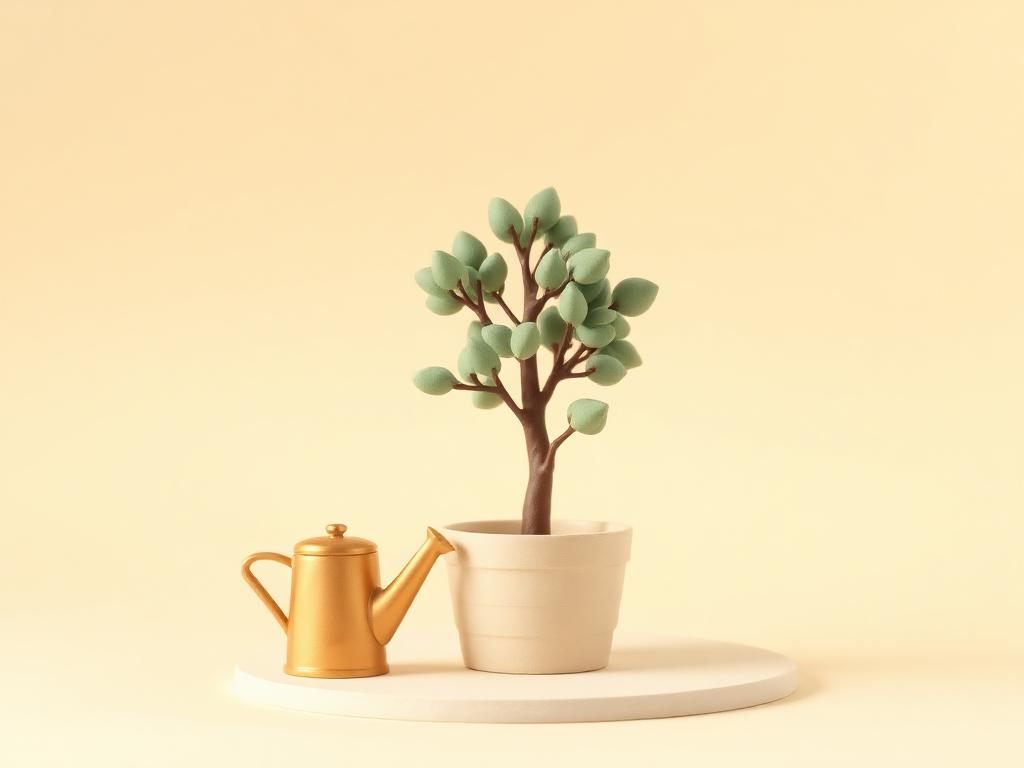
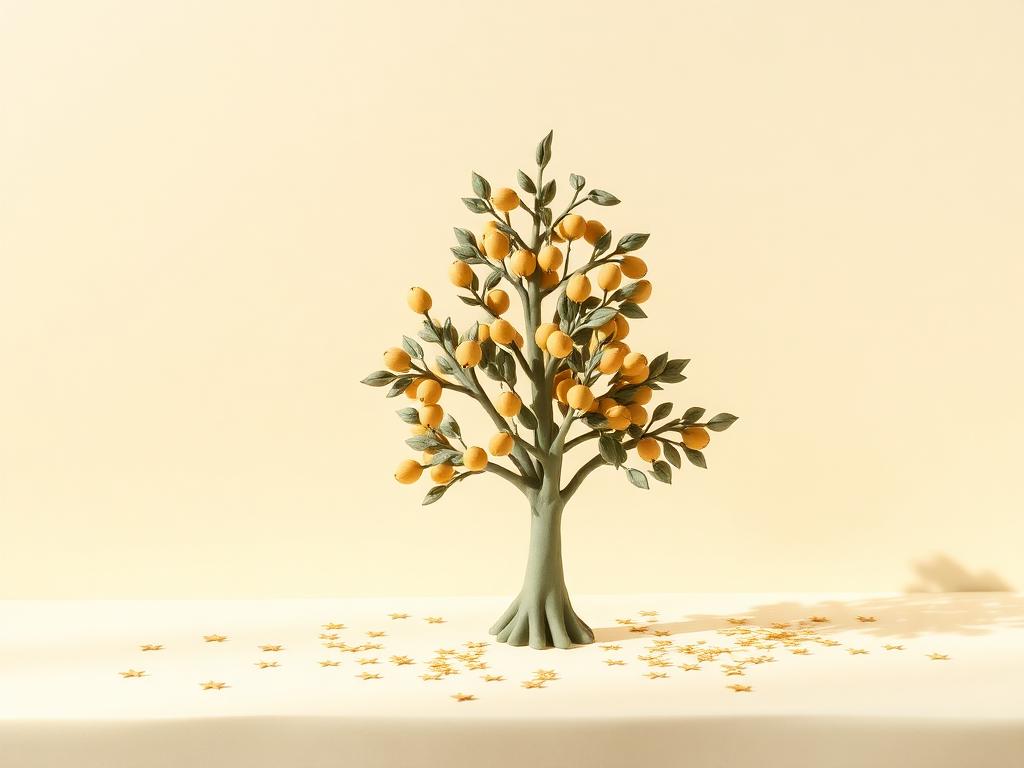
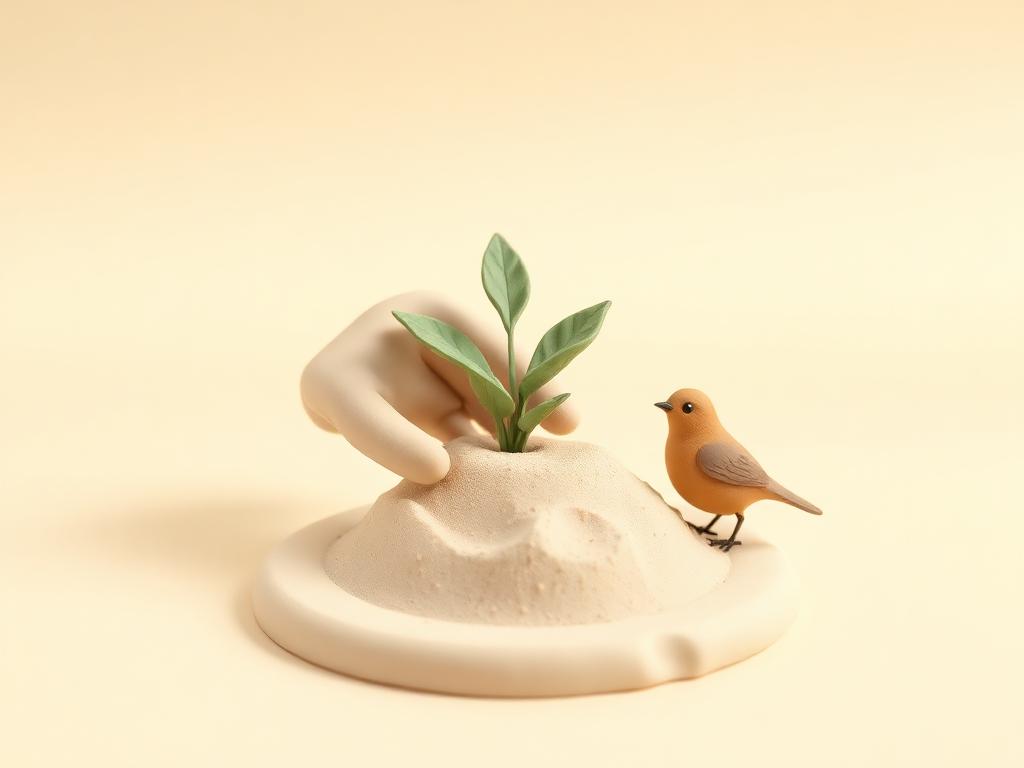
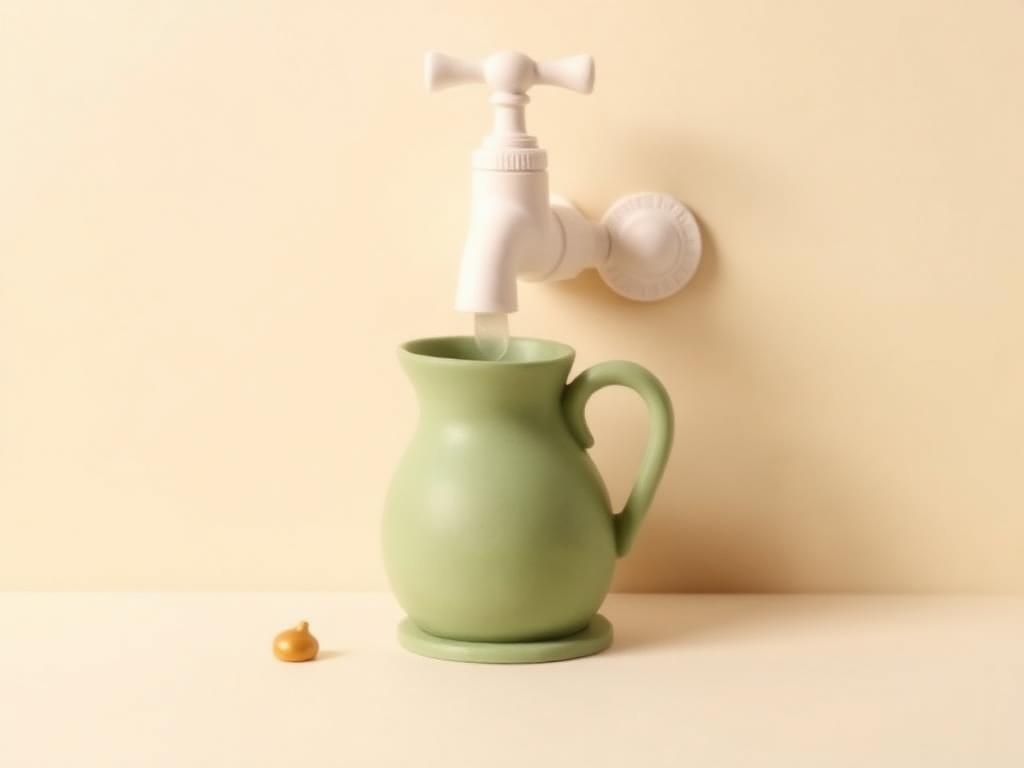
The earth is not ours; it is a trust. The Prophet ﷺ told us that planting a tree brings reward whenever something eats from it, that removing a harmful branch from a road can be a cause of forgiveness, and he corrected a Companion for using too much water in wudu even beside a flowing river. These five lessons give children concrete habits — a watering can, a bin bag, a shorter shower — grounded in the ayah shown from the verified Qur'an text and hadith resolvable on sunnah.com.
Lesson 1 · We are looking after it · ages 5-7
The earth is a trust
Allah made us caretakers on the earth, so how we treat it is part of how we answer to Him.
1Made for us, not owned by us
Allah spread out the earth and put in it what we need. A gift you were trusted with is looked after, not wrecked.
2Caretakers
Allah placed people on the earth to look after it. That includes a child looking after their street, garden and classroom.
3Small circle first
Your trust starts with what you can reach: your room, your bag, the park at the end of the road.
4Everything praises Allah
Trees, birds and rain all glorify Allah. Damaging them for fun is not a small thing.
5One habit today
Leaving a place cleaner than you found it is a Muslim habit, not just a school rule.
Wa iz qaala rabbuka lil malaaa'ikati innee jaa'ilun fil ardi khaleefatan qaalooo ataj'alu feehaa mai yufsidu feehaa wa yasfikud dimaaa'a wa nahnu nusabbihu bihamdika wa nuqaddisu laka qaala inneee a'lamu maa laa ta'lamoon
“And [mention, O Muhammad], when your Lord said to the angels, "Indeed, I will make upon the earth a successive authority." They said, "Will You place upon it one who causes corruption therein and sheds blood, while we declare Your praise and sanctify You?" Allah said, "Indeed, I know that which you do not know."”
Surah Ar-Rahmaan · 55:10
وَٱلْأَرْضَ وَضَعَهَا لِلْأَنَامِ
Wal arda wada'ahaa lilanaame
“And the earth He laid [out] for the creatures.”
“The Messenger of Allah (ﷺ) said: The world is sweet and verdant, and verily Allah has made you stewards over it, and He will see what you do.”
Sahih Muslim 2742
Do this before next time
Pick one place you use every day and leave it tidier than you found it.
Lesson 2 · Reward that keeps growing · ages 5-7
Plant something
Whenever a bird, person or animal eats from a tree you planted, the reward is written for you.
1The hadith
The Prophet ﷺ said that no Muslim plants a tree or sows a field from which a human, bird or animal eats without it being counted as charity for him.
2Charity you don't carry
You plant once; the sadaqah continues while the plant lives. That is one of the easiest good deeds a child can start.
3Start tiny
A pot on a windowsill, herbs in a cup, a sunflower seed in a corner of the garden — all count.
4Look after it
Planting is the beginning; watering is the follow-through. Islam values the second part too.
5Never destroy
Snapping branches, pulling leaves off and trampling plants for fun is the opposite of this hadith.
Wa Huwal lazeee anzala minas samaaa'i maaa'an fa akhrajnaa bihee nabaata kulli shai'in fa akhrajnaa minhu khadiran nukhriju minhu habbam mutaraakibanw wa minan nakhli min tal'ihaa qinwaanun daaniyatunw wa jannaatim min a'naabinw wazzaitoona warrummaana mushhtabihanw wa ghaira mutashaabih; unzurooo ilaa samariheee izaaa asmars wa yan'ih; inna fee zaalikum la Aayaatil liqawminy yu'minoon
“And it is He who sends down rain from the sky, and We produce thereby the growth of all things. We produce from it greenery from which We produce grains arranged in layers. And from the palm trees - of its emerging fruit are clusters hanging low. And [We produce] gardens of grapevines and olives and pomegranates, similar yet varied. Look at [each of] its fruit when it yields and [at] its ripening. Indeed in that are signs for a people who believe.”
Surah Abasa · 80:24
فَلْيَنظُرِ ٱلْإِنسَٰنُ إِلَىٰ طَعَامِهِۦٓ
Falyanzuril insanu ilaa ta-amih
“Then let mankind look at his food -”
“The Prophet (ﷺ) said, No Muslim plants a plant or sows a crop, then a human or an animal or a bird eats from it, but it will be charity for him.”
Sahih al-Bukhari 2320
Do this before next time
Plant one seed or seedling this week and set a reminder to water it.
Lesson 3 · Even beside a river · ages 8-11
Careful with water
Wudu with a small amount of water is a sunnah, and using too much is discouraged even when water seems endless.
1The teaching
The Prophet ﷺ warned against extravagance in water for wudu — the point stands even where water is plentiful.
2The sunnah measure
He ﷺ performed wudu with a small quantity of water and still washed every limb properly. Careful is not careless.
3Tap off
Turn the tap off while you rub between your fingers or wipe your head, and back on to rinse.
4Others need it
Millions of people walk to fetch water. Wasting it is not neutral when someone else is short.
5Same at home
Shorter showers, full washing machines, a jug in the fridge instead of running the tap cold.
Awalam yaral lazeena kafarooo annas samaawaati wal arda kaanataa ratqan faftaqnaahumaa wa ja'alnaa minal maaa'i kulla shai'in haiyin afalaa yu'minoon
“Have those who disbelieved not considered that the heavens and the earth were a joined entity, and We separated them and made from water every living thing? Then will they not believe?”
“The Messenger of Allah (ﷺ) passed by Sa'd while he was performing ablution, and he said: What is this extravagance? Sa'd said: Can there be any extravagance in ablution? He said: Yes, even if you are on the bank of a flowing river.”
Sunan Ibn Majah 425
Do this before next time
Make wudu today using as little water as you can while still washing each part properly.
Lesson 4 · Removing harm is worship · ages 8-11
Clear the path
A man removed a thorny branch from a road and was forgiven for it — litter and hazards are our business too.
1The hadith
The Prophet ﷺ said a man found a thorny branch on the road, removed it, and Allah appreciated it and forgave him.
2Litter counts
Broken glass, a slippery bag, a bike blocking a pavement — clearing any of it is the same kind of deed.
3Never add to it
Dropping wrappers means someone else has to do the good deed you created for them.
4Removing harm from the road
The Prophet ﷺ listed removing harmful things from people's paths among the branches of faith.
5Do it unseen
This deed works best when nobody notices — no photo, no announcement.
Surah Az-Zalzala · 99:7
فَمَن يَعْمَلْ مِثْقَالَ ذَرَّةٍ خَيْرًۭا يَرَهُۥ
Famaiy ya'mal mithqala zarratin khai raiy-yarah
“So whoever does an atom's weight of good will see it,”
Wa anfiqoo fee sabeelil laahi wa laa tulqoo bi aydeekum ilat tahlukati wa ahsinoo; innal laaha yuhibbul muhsineen
“And spend in the way of Allah and do not throw [yourselves] with your [own] hands into destruction [by refraining]. And do good; indeed, Allah loves the doers of good.”
“A person while walking along the path saw the branches of a tree lying there. He said: By Allah, I shall remove these from this so that these may not do harm to the Muslims, and he was admitted into Paradise.”
Sahih Muslim 1914c
Do this before next time
Pick up three pieces of litter on your way home today, without telling anyone.
Lesson 5 · Food, money and things · ages 12-15
Waste is never small
Allah does not love those who waste, and the Prophet ﷺ taught us not to leave food or throw away what still has use.
1The clear rule
Allah tells us to eat and drink without being extravagant, and says He does not love the wasteful.
2Food first
The Prophet ﷺ told us to finish what is on our fingers and plate, and to pick up a dropped morsel and eat it after cleaning it.
3Not only food
Buying what you will not use, replacing what still works and binning clothes that fit are the same problem in a different form.
4Give it on
What you no longer need can be sadaqah. Passing something on beats throwing it away.
5Blessings are guarded
Being careful with what Allah gave you is a way of thanking Him for it, and thanks is how blessings stay.
Wa aati zal qurbaa haqqahoo walmiskeena wabnas sabeeli wa laa tubazzir tabzeeraa
“And give the relative his right, and [also] the poor and the traveler, and do not spend wastefully.”
“The Messenger of Allah (ﷺ) said: When any one of you drops a morsel, he should pick it up and remove any dirt on it, and then eat it, and should not leave it for Satan.”
Sahih Muslim 2033d
Do this before next time
Finish everything on your plate today, and put one usable item aside to give away instead of binning it.
Every ayah on this page comes from the Tanzil Uthmani text of the Qur'an with the Sahih International translation, and every hadith carries its collection and number so you can check it yourself. Back to the learning path