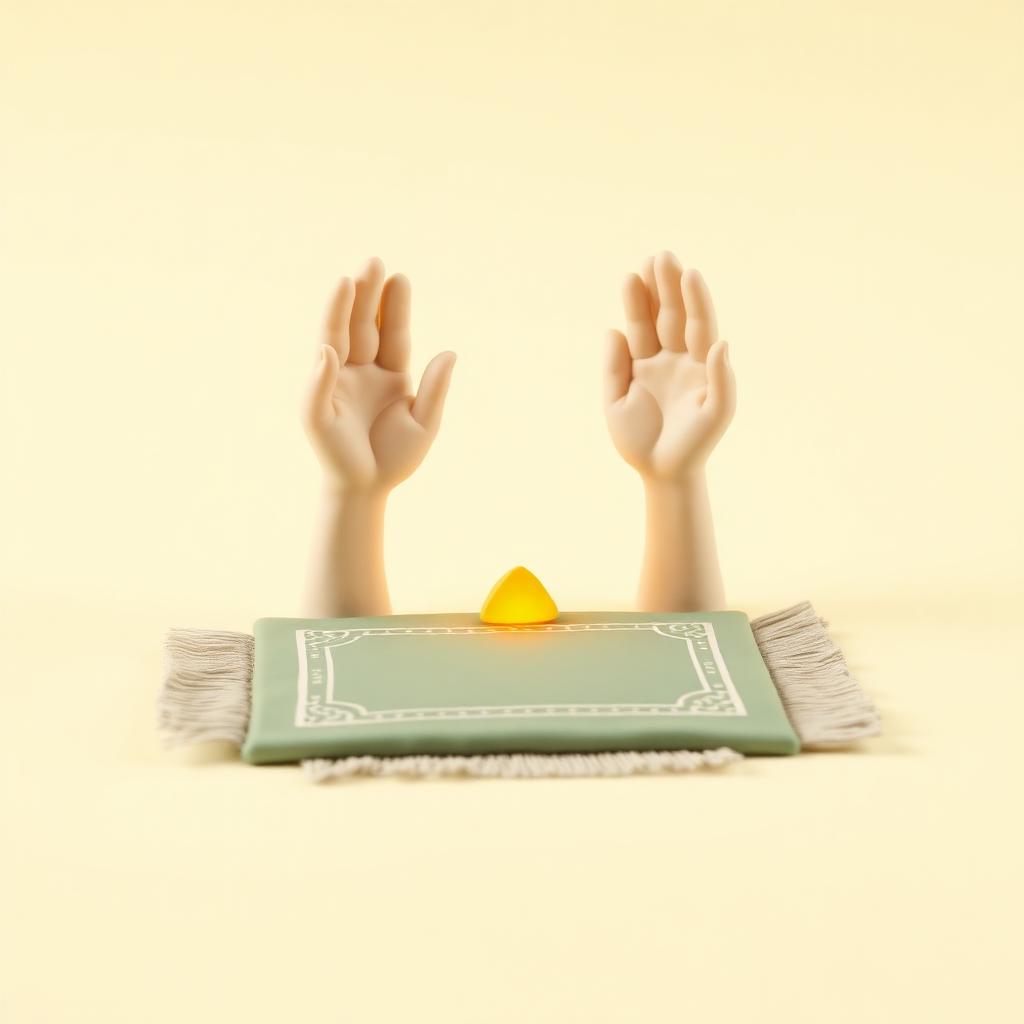
The companions were not all grown men. Anas ibn Malik was about ten when he began serving the Prophet ﷺ, Ibn Abbas was a small boy when the Prophet ﷺ made dua for him, and Zayd ibn Thabit was a teenager trusted to write down revelation. Every lesson here is built on a narration with its collection and number so a parent or child can check it. The point is simple: your age is not a reason to wait before loving Allah and serving people well.
Lesson 1 · Gentle with children · ages 5-7
Anas: ten years of service
Anas served the Prophet ﷺ for ten years as a boy, and said he was never once scolded for what he did or did not do.
1Who he was
Anas ibn Malik was a boy of Madinah whose mother brought him to serve the Prophet ﷺ. He stayed close to him for about ten years.
2Never scolded
Anas said he served the Prophet ﷺ for ten years and was never hit, never insulted, and never frowned at.
3What he learned
Because he was near the Prophet ﷺ constantly, Anas became one of the largest narrators of hadith — service turned into knowledge.
4Lesson for you
Helping in the house, carrying something for a teacher, or setting out the prayer mats is the same kind of quiet service.
5Lesson for adults
The Prophet ﷺ was patient with a child who made mistakes. Correction can be kind and still work.
Fabimaa rahmatim minal laahi linta lahum wa law kunta fazzan ghaleezal qalbi lanfaddoo min hawlika fafu 'anhum wastaghfir lahum wa shaawirhum fil amri fa izaa 'azamta fatawakkal 'alal laah; innallaaha yuhibbul mutawak kileen
“So by mercy from Allah, [O Muhammad], you were lenient with them. And if you had been rude [in speech] and harsh in heart, they would have disbanded from about you. So pardon them and ask forgiveness for them and consult them in the matter. And when you have decided, then rely upon Allah. Indeed, Allah loves those who rely [upon Him].”
“I served the Prophet (ﷺ) for ten years, and he never said to me, 'Uff' (a minor harsh word denoting impatience), and he never blamed me by saying, 'Why did you do so or why didn't you do so?'”
Sahih al-Bukhari 6038
Do this before next time
Do one job in your home today without being asked, and do not tell anyone you did it.
Lesson 2 · Ask Allah for knowledge · ages 8-11
Ibn Abbas: a dua for understanding
The Prophet ﷺ put his hand on the young Ibn Abbas and asked Allah to teach him the Book — and he grew into a great scholar of the Qur'an.
1Who he was
Abdullah ibn Abbas was the Prophet's ﷺ young cousin, a boy in the Prophet's ﷺ lifetime and a teacher of the Qur'an afterwards.
2The dua
The Prophet ﷺ embraced him and said, 'O Allah, teach him the Book (the Qur'an).'
3He watched and asked
He stayed the night to watch how the Prophet ﷺ prayed at night — he learned by observing carefully, not only by listening.
4Knowledge is a gift
Understanding is something Allah grants. Study hard, then ask Him to open your mind.
5Your dua
Say 'Rabbi zidni ilma' — 'My Lord, increase me in knowledge' — before you open a book.
Fata'aalal laahul Malikul Haqq; wa laa ta'jal bil Quraani min qabli ai yuqdaaa ilaika wahyuhoo wa qur Rabbi zidnee 'ilmaa
“So high [above all] is Allah, the Sovereign, the Truth. And, [O Muhammad], do not hasten with [recitation of] the Qur'an before its revelation is completed to you, and say, "My Lord, increase me in knowledge."”
Yu'til Hikmata mai yashaaa'; wa mai yutal Hikmata faqad ootiya khairan kaseeraa; wa maa yazzakkaru illaaa ulul albaab
“He gives wisdom to whom He wills, and whoever has been given wisdom has certainly been given much good. And none will remember except those of understanding.”
“The Prophet (ﷺ) embraced me and said, 'O Allah! Teach him (the knowledge of) the Book (Qur'an).'”
Sahih al-Bukhari 143
Do this before next time
Say 'Rabbi zidni ilma' before every piece of homework this week.
Lesson 3 · Careful work matters · ages 8-11
Zayd: the boy who wrote revelation
Zayd ibn Thabit was a young man of Madinah trusted to write down the Qur'an, and later to gather it together.
1Who he was
Zayd ibn Thabit was a teenager when the Prophet ﷺ came to Madinah, known for reading and writing well.
2A scribe of revelation
He was among those who wrote down the Qur'an for the Prophet ﷺ.
3Gathering the Qur'an
After the Prophet ﷺ died, Abu Bakr and Umar asked Zayd to collect the Qur'an, and he described how carefully he worked at it.
4Why care matters
Zayd checked and re-checked. In deen, being accurate is part of being honest.
5Lesson for you
Neat, careful work — in your Qur'an copy, in your notebook — is worship when you intend it for Allah.
Innaa Nahnu nazalnaz Zikra wa Innaa lahoo lahaa fizoon
“Indeed, it is We who sent down the Qur'an and indeed, We will be its guardian.”
“Zayd ibn Thabit reported: Abu Bakr said to me, 'You are a wise young man, and we do not have any suspicion about you, and you used to write the Divine Inspiration for Allah's Messenger (ﷺ). So you should search for (the fragmentary scripts of) the Qur'an and collect it (in one book).'”
Sahih al-Bukhari 4986
Do this before next time
Copy one short ayah by hand as neatly as you can, then check every letter.
Lesson 4 · Advice you never forget · ages 8-11
Ibn Umar: night prayer and a gentle nudge
The Prophet ﷺ told the young Ibn Umar he would be an excellent man if he prayed at night — and afterwards he slept very little.
1Who he was
Abdullah ibn Umar was a young companion famous for following the Sunnah exactly.
2The nudge
He dreamt something, and the Prophet ﷺ said Abdullah would be a good man if he prayed at night. After that, Ibn Umar prayed at night regularly.
3Small words, long effect
One sentence of encouragement shaped his whole life. Be careful and kind with what you say to others.
4Night prayer is for anyone
Two rak'ah before Fajr, or after Isha before bed, is a real start — not only for adults.
5Follow, do not show off
Ibn Umar's habit was quiet. Worship at night is private by nature.
Wa minal laili fatahajjad bihee naafilatal laka 'asaaa any yab'asaka Rabbuka Maqaamam Mahmoodaa
“And from [part of] the night, pray with it as additional [worship] for you; it is expected that your Lord will resurrect you to a praised station.”
Surah Adh-Dhaariyat · 51:17
كَانُوا۟ قَلِيلًۭا مِّنَ ٱلَّيْلِ مَا يَهْجَعُونَ
kaanoo qaleelam minal laili maa yahja'oon
“They used to sleep but little of the night,”
Surah Adh-Dhaariyat · 51:18
وَبِٱلْأَسْحَارِ هُمْ يَسْتَغْفِرُونَ
Wa bilashaari hum yastaghfiroon
“And in the hours before dawn they would ask forgiveness,”
“Allah's Messenger (ﷺ) said, 'Abdullah is a good man. Would that he prayed the night prayer (Tahajjud).' After that, `Abdullah used to sleep but a little at night.”
Sahih al-Bukhari 1122
Do this before next time
Pray two extra rak'ah tonight after Isha, quietly, and tell no one.
Lesson 5 · A dua after every salah · ages 12-15
Mu'adh: 'I love you'
The Prophet ﷺ took Mu'adh's hand, told him he loved him, and taught him a short dua to say after every prayer.
1Who he was
Mu'adh ibn Jabal was a young companion of Madinah known for his understanding of halal and haram, sent later to teach in Yemen.
2The words of love
The Prophet ﷺ held his hand and said, 'O Mu'adh, by Allah, I love you,' then taught him what to say after every salah.
3The dua
'Allahumma a'inni ala dhikrika wa shukrika wa husni ibadatik' — 'O Allah, help me to remember You, to thank You, and to worship You well.'
4Help is asked for
Even worship needs Allah's help. Asking for it is not weakness; it is the correct attitude.
5Tell people you love them
The Prophet ﷺ said it out loud. Saying it to family and friends is Sunnah.
Wa iz ta azzana Rabbukum la'in shakartum la azeedannakum wa la'in kafartum inn'azaabee lashadeed
“And [remember] when your Lord proclaimed, 'If you are grateful, I will surely increase you [in favor]; but if you deny, indeed, My punishment is severe.' "”
“The Messenger of Allah (ﷺ) took me by the hand and said: O Mu'adh, by Allah, I love you, by Allah, I love you. He then said: I advise you, O Mu'adh, say at the end of every prayer: 'O Allah, assist me in remembering You, in giving You thanks, and worshipping You well.'”
Sunan Abi Dawud 1522
“When Allah's Messenger (ﷺ) sent Mu'adh to Yemen, he said: you are going to a people of the Book. Invite them to worship Allah alone, and tell them of the five daily prayers and the Zakat.”
Allahumma a'inni ala dhikrika wa shukrika wa husni ibadatik
O Allah, help me to remember You, to thank You, and to worship You well.
Sunan Abi Dawud 1522
Do this before next time
Say this dua after each of the five prayers today, and tell one family member you love them.
Every ayah on this page comes from the Tanzil Uthmani text of the Qur'an with the Sahih International translation, and every hadith carries its collection and number so you can check it yourself. Back to the learning path