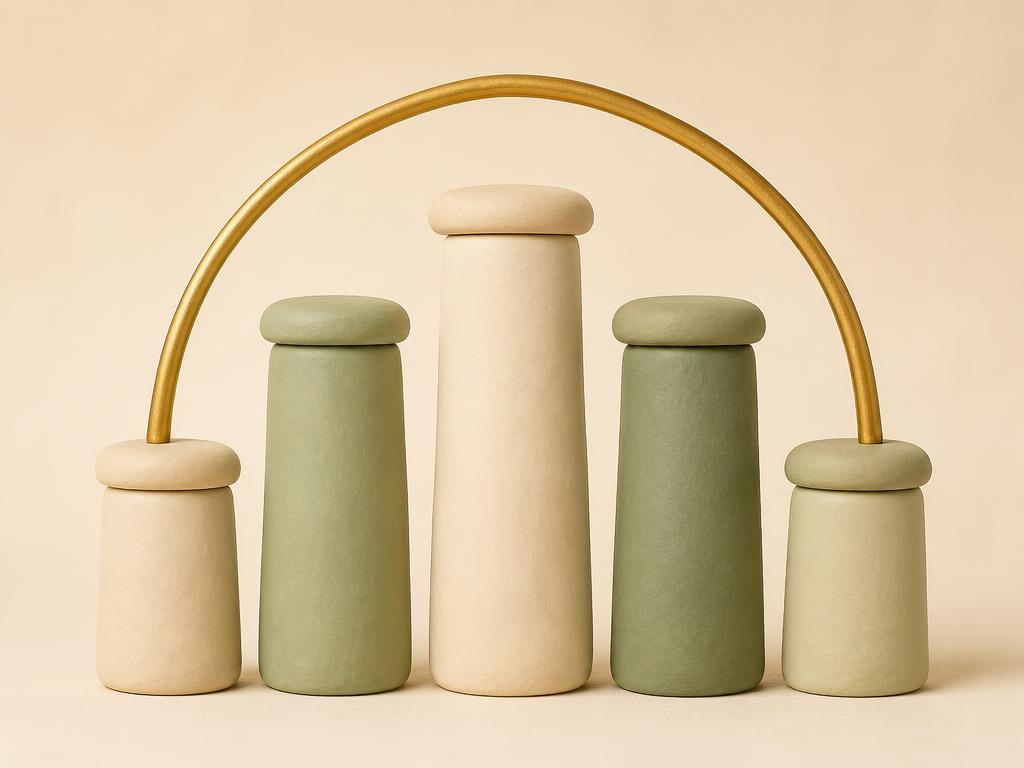
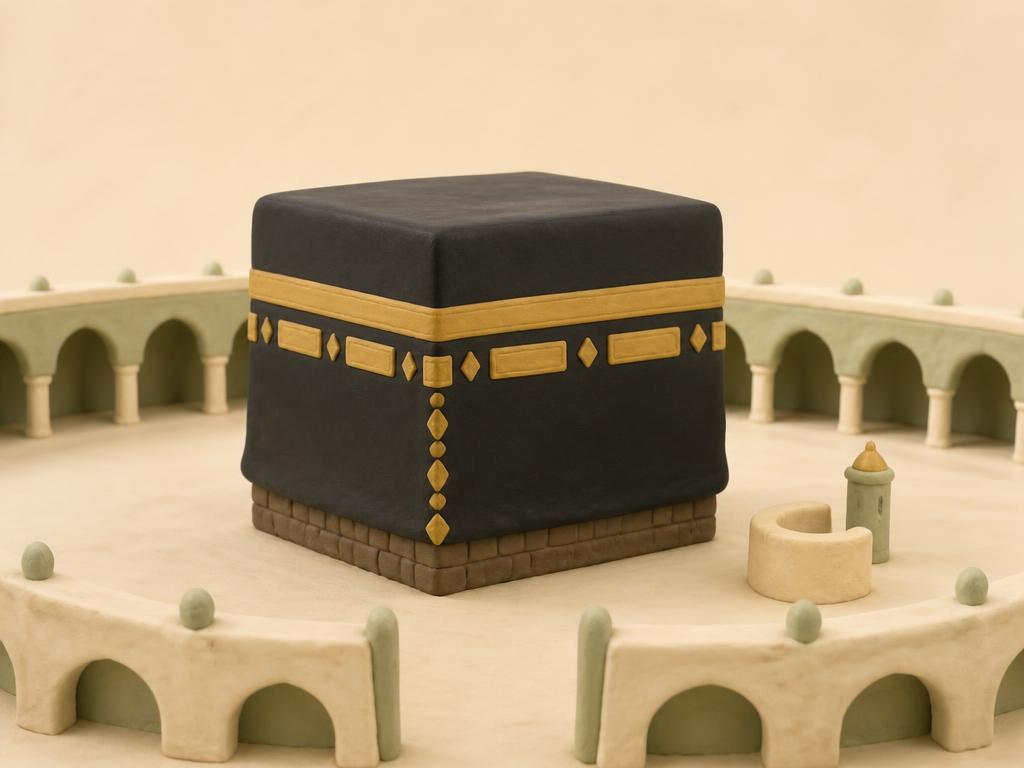
The Prophet ﷺ described Islam as built on five things. This module takes each pillar in turn: the words, the actions, who it applies to, and the part a 5-, 10- or 15-year-old can start doing today.
Pillar 1 · ages 5-7
Shahadah — the words we live by
The shahadah is a promise in two halves: Allah alone is worshipped, and Muhammad ﷺ is the messenger we follow.
1Half one
La ilaha illallah — there is nothing worthy of worship except Allah.
2Half two
Muhammadur rasulullah — Muhammad ﷺ is the messenger of Allah.
3It is a promise
Saying it means: I obey Allah, and I copy the way of His Prophet ﷺ.
4It is the door
Anyone who believes it and says it sincerely becomes a Muslim.
5Say it often
It is the best dhikr, and the words we hope to say at the end of our life.
“Islam is built upon five: to worship Allah alone, to establish the prayer, to give zakat, to fast Ramadan, and to make hajj to the House.”
Innaneee Anal laahu laaa ilaaha illaa Ana fa'budnee wa aqimis-salaata lizikree
“Indeed, I am Allah. There is no deity except Me, so worship Me and establish prayer for My remembrance.”
“Pray as you have seen me praying.”
Sahih al-Bukhari 631
“Command your children to pray when they become seven years old.”
Sunan Abi Dawud 495
Do this before next time
Open the Salah module and do one rakat in practice mode with a grown-up watching.
Pillar 3 · ages 8-11
Zakat & sadaqah — money that cleans the heart
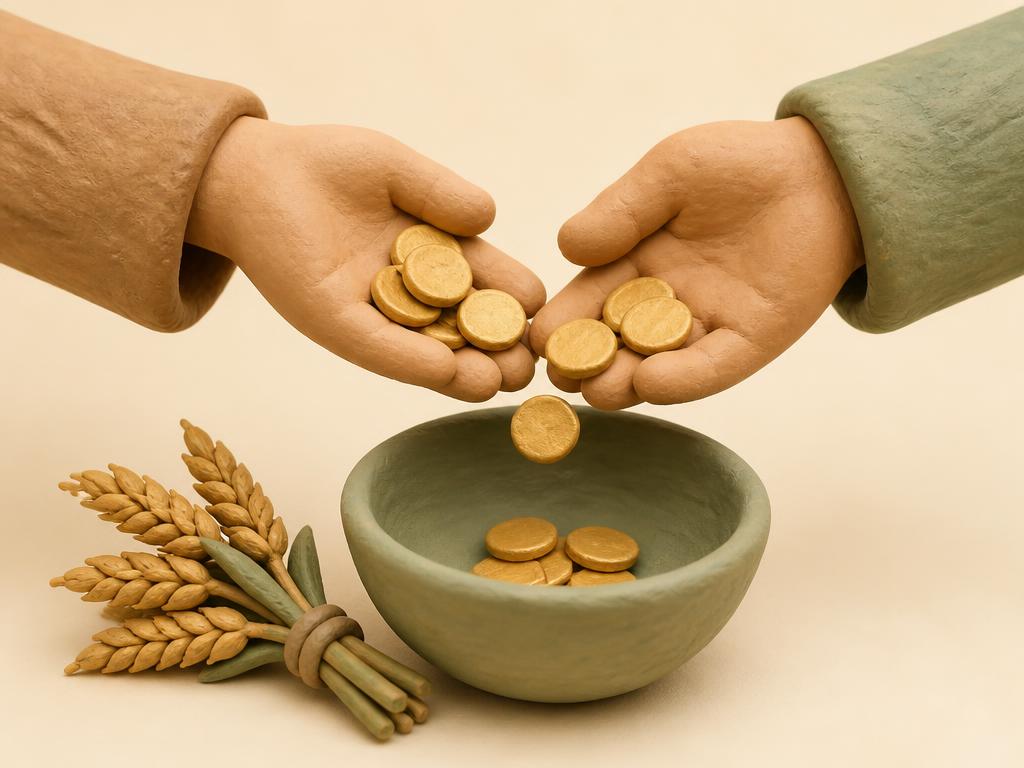
Zakat is not a favour to the poor — it is their right, taken out of wealth that has been saved for a year. Sadaqah is anything extra you give, any time.
1A fixed small share
Zakat is a fixed small share of savings that a Muslim adult has kept for a full lunar year above the nisab (minimum amount).
2Who receives it
The Qur'an lists several groups who receive zakat, starting with the poor and the needy.
3Sadaqah is open
Any amount, any time, to anyone — no rules, no minimum.
4Not only money
A kind word, helping someone carry a bag, even a smile counts as charity.
5Zakat al-Fitr
A small food-based charity given by every family member before Eid al-Fitr prayer.
Innamas sadaqaatu lilfuqaraaa'i walmasaakeeni wal 'aamileena 'alaihaa wal mu'al lafati quloobuhum wa fir riqaabi walghaarimeena wa fee sabeelil laahi wabnis sabeeli fareedatam minal laah; wal laahu 'Aleemun Hakeem
“Zakah expenditures are only for the poor and for the needy and for those employed to collect [zakah] and for bringing hearts together [for Islam] and for freeing captives [or slaves] and for those in debt and for the cause of Allah and for the [stranded] traveler - an obligation [imposed] by Allah. And Allah is Knowing and Wise.”
Wa aqeemus salaata wa aatuz zakaah; wa maa tuqaddimoo li anfusikum min khairin tajidoohu 'indal laah; innal laaha bimaa ta'maloona baseer
“And establish prayer and give zakah, and whatever good you put forward for yourselves - you will find it with Allah. Indeed, Allah of what you do, is Seeing.”
“Your smile in the face of your brother is charity.”
Jami' at-Tirmidhi 1956
Do this before next time
Put something of your own — money, a toy, or your time — where it helps someone else this week.
Pillar 4 · ages 8-11
Sawm — the month of Ramadan
For one lunar month, Muslims stop eating and drinking from Fajr to Maghrib — to build self-control, feel what hungry people feel, and get closer to Allah.
1From Fajr to Maghrib
No food, no drink, and extra care with the tongue and the eyes.
2Suhoor & iftar
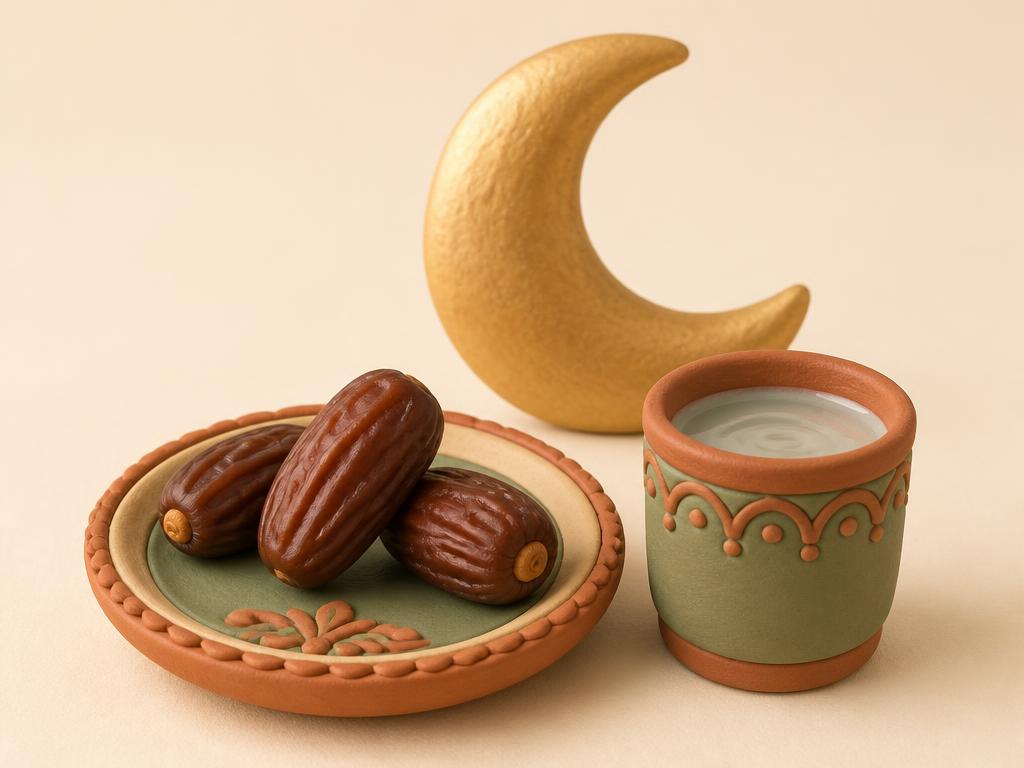
Suhoor is the meal before Fajr; iftar opens the fast at Maghrib — the Prophet ﷺ often opened with dates and water.
3Children practise
Fasting becomes a duty at puberty. Younger children practise with half days or one weekend day.
4Who is excused
The sick, travellers, the very old, and mothers who are pregnant or nursing — Islam is not harsh.
5The best nights
Laylatul Qadr is in the last ten nights and is worth more than a thousand months.
Shahru Ramadaanallazeee unzila feehil Qur'aanu hudal linnaasi wa baiyinaatim minal hudaa wal furqaan; faman shahida minkumush shahra falyasumhu wa man kaana mareedan aw 'alaa safarin fa'iddatum min ayyaamin ukhar; yureedul laahu bikumul yusra wa laa yureedu bikumul 'usra wa litukmilul 'iddata wa litukabbirul laaha 'alaa maa hadaakum wa la'allakum tashkuroon
“The month of Ramadhan [is that] in which was revealed the Qur'an, a guidance for the people and clear proofs of guidance and criterion. So whoever sights [the new moon of] the month, let him fast it; and whoever is ill or on a journey - then an equal number of other days. Allah intends for you ease and does not intend for you hardship and [wants] for you to complete the period and to glorify Allah for that [to] which He has guided you; and perhaps you will be grateful.”
Surah Al-Qadr · 97:3
لَيْلَةُ ٱلْقَدْرِ خَيْرٌۭ مِّنْ أَلْفِ شَهْرٍۢ
Lailatul qadri khairum min alfee shahr
“The Night of Decree is better than a thousand months.”
“Whoever fasts Ramadan out of faith and hoping for reward will have his previous sins forgiven.”
Sahih al-Bukhari 38
Do this before next time
Plan your Ramadan goal: how many fasts you will try, and one extra good habit for the month.
Pillar 5 · ages 12-15
Hajj & Umrah — the journey to the Kabah
Once in a lifetime, if they are able, every Muslim travels to Makkah. Millions stand together in the same two white cloths, with no rich and no poor.
1Once, if able
Hajj is due once in a lifetime on any adult Muslim who can afford it and is able to travel safely.
2Ihram
Pilgrims put on simple white cloths and enter a state where fighting, harming animals and even plucking plants are off limits.
3Tawaf & sa'i
Seven circuits around the Kabah, then walking seven times between the hills of Safa and Marwa.
4The day of Arafah
The heart of Hajj: standing on the plain of Arafah, making dua until sunset.
5Umrah
A shorter visit — ihram, tawaf and sa'i — which can be done at any time of year.
Feehi Aayaatum baiyinaatum Maqaamu Ibraaheema wa man dakhalahoo kaana aaminaa; wa lillaahi 'alan naasi Hijjul Baiti manis tataa'a ilaihi sabeelaa; wa man kafara fa innal laaha ghaniyyun 'anil 'aalameen
“In it are clear signs [such as] the standing place of Abraham. And whoever enters it shall be safe. And [due] to Allah from the people is a pilgrimage to the House - for whoever is able to find thereto a way. But whoever disbelieves - then indeed, Allah is free from need of the worlds.”
Wa iz ja'alnal Baita masaabatal linnassi wa amnanw wattakhizoo mim Maqaami Ibraaheema musallaaa; wa 'ahidnaaa ilaaa Ibraaheema wa Ismaa'eela an tahhiraa Baitiya littaaa'ifeena wal'aakifeena warrukka'is sujood
“And [mention] when We made the House a place of return for the people and [a place of] security. And take, [O believers], from the standing place of Abraham a place of prayer. And We charged Abraham and Ishmael, [saying], "Purify My House for those who perform Tawaf and those who are staying [there] for worship and those who bow and prostrate [in prayer]."”
“Jabir described the Hajj of the Prophet ﷺ: seven circuits at the House, then out to Safa and Marwa, standing at Arafah until sunset, and on to Muzdalifa and Mina.”
Sahih Muslim 1218a
Do this before next time
Draw the route of Hajj in order and label Makkah, Mina, Arafah and Muzdalifah.
Every ayah on this page comes from the Tanzil Uthmani text of the Qur'an with the Sahih International translation, and every hadith carries its collection and number so you can check it yourself. Back to the learning path