The seerah is the story of the best human being who ever lived — told for children, in order, with the years marked. Out of respect, we never draw the Prophet ﷺ or his companions: every picture here is a place, an object or a sky.
Lesson 1 · c. 570 CE · ages 8-11
Makkah before Islam
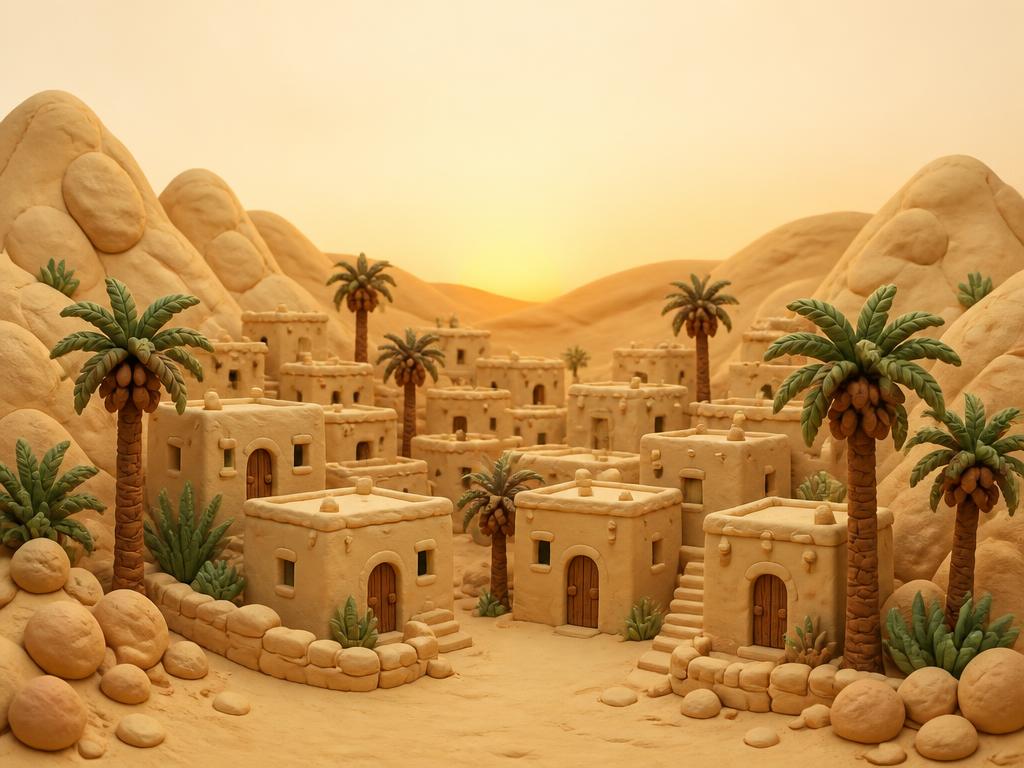
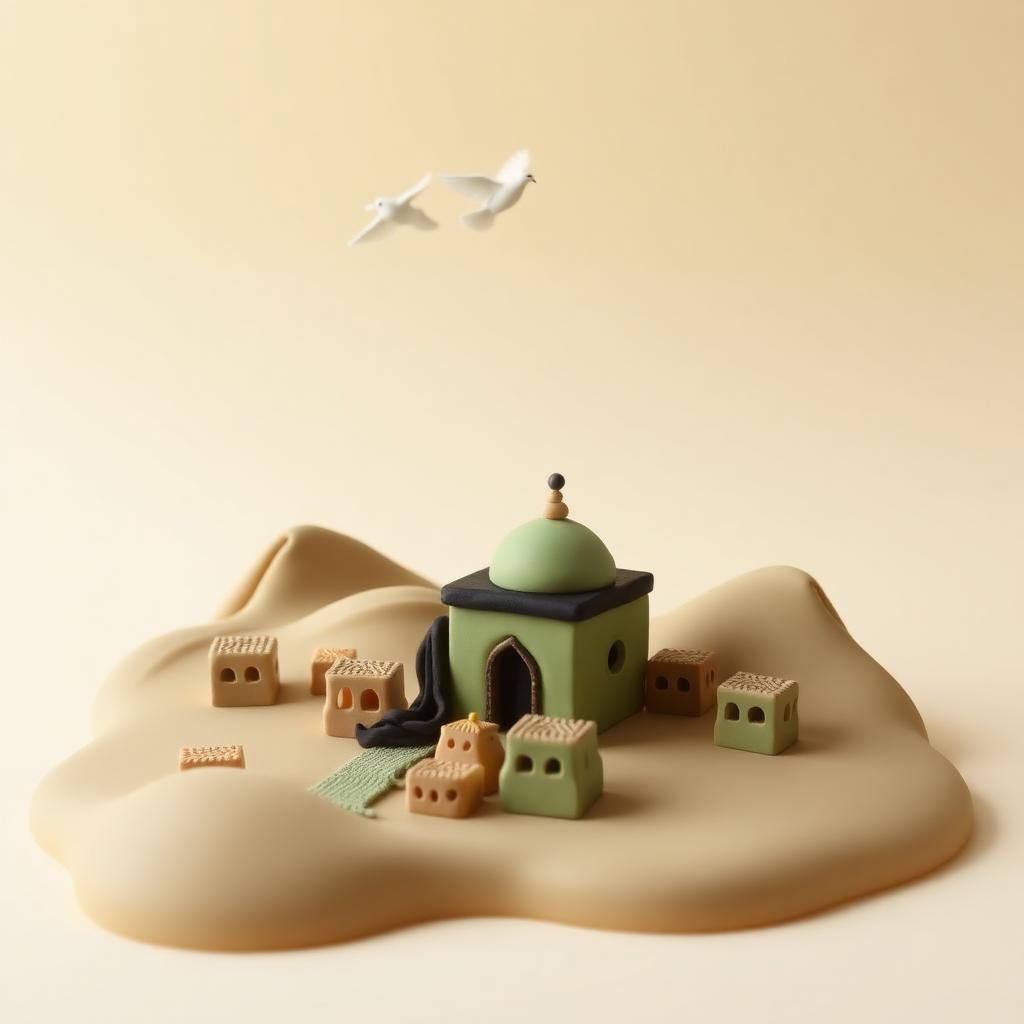
Makkah was a desert trading city built around the Kabah — the House that Prophet Ibrahim and his son Ismail had raised for the worship of Allah alone. By this time it had filled up with idols.
1The House of Allah
The Kabah was built by Ibrahim and Ismail, peace be upon them, for worshipping Allah alone.
2Idols everywhere
Over time people put statues around and inside it and forgot the message of Ibrahim.
3A hard place to be weak
Tribes protected their own; orphans, slaves and poor people were often treated badly.
4Born an orphan
Muhammad ﷺ was born in Makkah as an orphan — his father had already passed away before his birth.
5Raised by family
His mother died when he was a young boy; his grandfather, and then his uncle, raised him afterwards.
Wa iz yarfa'u Ibraaheemul qawaa'ida minal Baitiwa Ismaa'eelu Rabbanaa taqabbal minnaa innaka Antas Samee'ul Aleem
“And [mention] when Abraham was raising the foundations of the House and [with him] Ishmael, [saying], "Our Lord, accept [this] from us. Indeed You are the Hearing, the Knowing.”
Do this before next time
Draw the Kabah and write one sentence about who built it and why.
Lesson 2 · his twenties · ages 8-11
Al-Amin — the trustworthy one
Long before he was a prophet, the people of Makkah nicknamed him Al-Amin — the trustworthy. He shepherded sheep, traded honestly, and never lied.
1A shepherd first
He looked after sheep as a boy — patient, quiet work that many prophets did.
2Honest trader
He traded on behalf of others and became known for never cheating anyone.
3Al-Amin
Even people who later fought him admitted he had never told a lie.
4Marriage to Khadijah
He married Khadijah bint Khuwaylid, may Allah be pleased with her, who became his greatest supporter.
5Peacemaker
When the tribes nearly fought over a dispute at the Kabah, he found a solution everyone accepted.
Laqad kaana lakum fee Rasoolil laahi uswatun hasanatul liman kaana yarjul laaha wal yawmal Aakhira wa azkaral laaha kaseeraa
“There has certainly been for you in the Messenger of Allah an excellent pattern for anyone whose hope is in Allah and the Last Day and [who] remembers Allah often.”
“Aishah, may Allah be pleased with her, described how the Prophet ﷺ used to go in seclusion in the cave of Hira, and how he came back to Khadija bint Khuwailid, his wife, saying 'Cover me! Cover me!' — and she answered, 'Never! By Allah, Allah will never disgrace you. You keep good relations with your kith and kin, help the poor and the destitute, serve your guests generously and assist the deserving calamity-afflicted ones.'”
Sahih al-Bukhari 3
Do this before next time
Practise being Al-Amin: keep one promise this week that nobody is checking on.
Lesson 3 · age 40 · ages 8-11
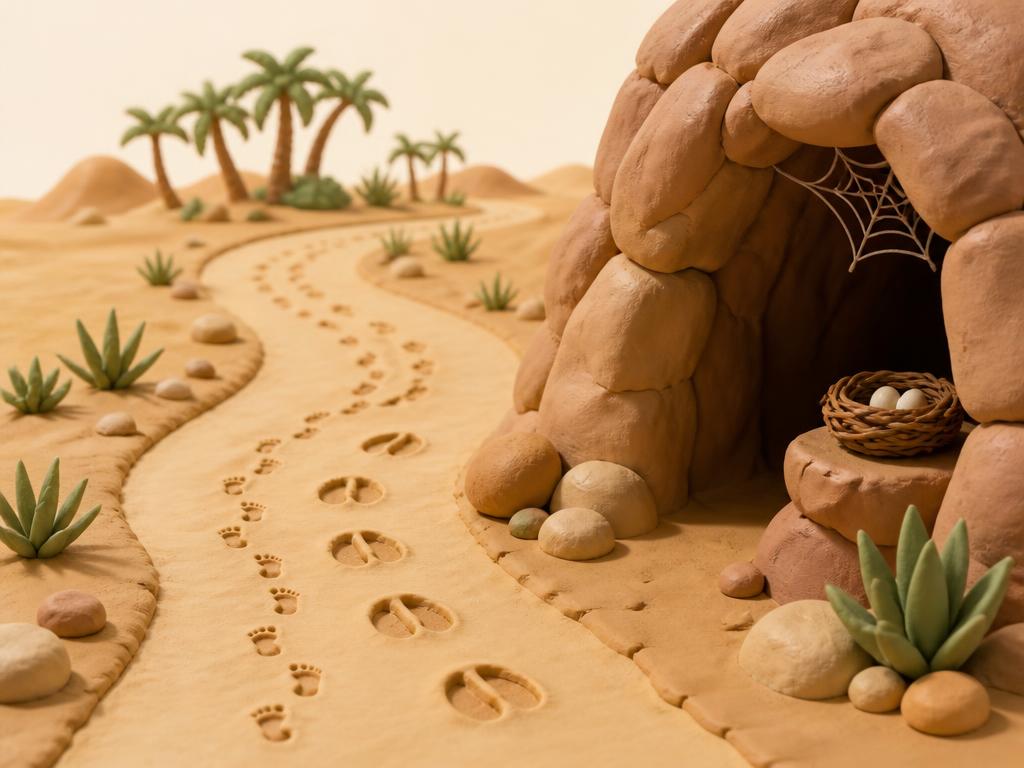
The cave of Hira — Iqra!
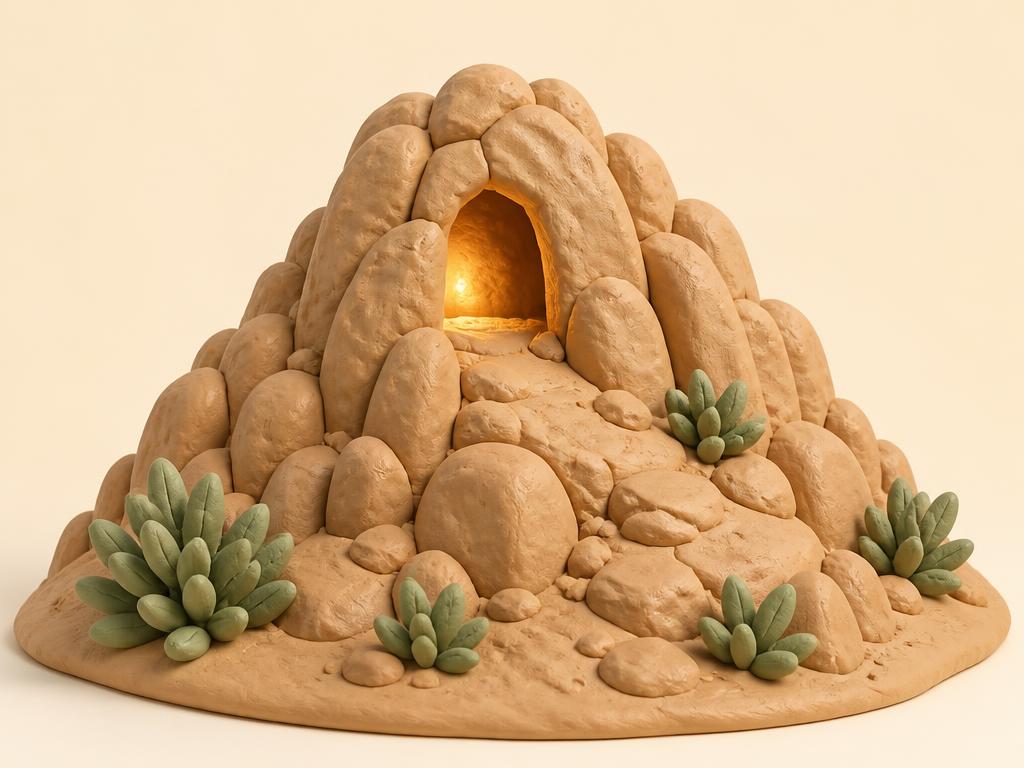
At forty, alone in the cave of Hira, an angel came to him with the first ayahs of Surah Al-Alaq — and the Qur'an began.
1Time alone
He would sit in the cave of Hira thinking about Allah and away from the idols of the city.
2The first word
The angel said: Iqra — Read! The first command of the Qur'an is about learning.
3Khadijah's comfort
He came home with his heart pounding; Khadijah wrapped him and comforted him.
4Piece by piece
Revelation continued piece by piece over many years, in Makkah and then Madinah.
5In Ramadan
The Qur'an began to be revealed in Ramadan, on a night Allah calls blessed.
“Indeed, We sent the Qur'an down during the Night of Decree.”
“Aisha, the mother of the faithful believers, narrated: The commencement of the Divine Inspiration to Allah's Messenger (ﷺ) was in the form of good dreams which came true like bright daylight, and then the love of seclusion was bestowed upon him. He used to go in seclusion in the cave of Hira where he used to worship (Allah alone) continuously for many days before his desire to see his family. He used to take with him the journey food for the stay and then come back to (his wife) Khadija to take his food likewise again till suddenly the Truth descended upon him while he was in the cave of Hira. The angel came to him and asked him to read. The Prophet (ﷺ) replied, 'I do not know how to read.' ... Thereupon he caught me for the third time and pressed me, and then released me and said, 'Read in the name of your Lord, who has created (all that exists), created man from a clot. Read! And your Lord is the Most Generous.' Then Allah's Messenger (ﷺ) returned with the Inspiration and with his heart beating severely. Then he went to Khadija bint Khuwailid and said, 'Cover me! Cover me!'”
Sahih al-Bukhari 3
Do this before next time
Read Surah Al-Alaq 1–5 in the Quran module and listen to it twice.
Lesson 4 · Makkan years · ages 12-15
Thirteen years of patience
For thirteen years in Makkah the Muslims were mocked, boycotted and hurt — and they answered with patience, not revenge.
1The first Muslims
The earliest believers included his close family and friends, along with many who had no tribe to protect them.
2Hurt for believing
Some of the early Muslims were beaten and tortured for their faith, and they held firm.
3Migration to Abyssinia
Some Muslims left Makkah for a while and were protected by a foreign king.
4The boycott
The Prophet's clan was cut off from trade and food for a long period for refusing to hand him over.
5A painful stretch
He lost people who had protected and supported him, and was rejected harshly elsewhere — yet he made dua for the people who hurt him.
“O you who have believed, seek help through patience and prayer. Indeed, Allah is with the patient.”
Surah Ash-Sharh · 94:5
فَإِنَّ مَعَ ٱلْعُسْرِ يُسْرًا
Fa inna ma'al usri yusra
“For indeed, with hardship [will be] ease.”
Surah Ash-Sharh · 94:6
إِنَّ مَعَ ٱلْعُسْرِ يُسْرًۭا
Inna ma'al 'usri yusra
“Indeed, with hardship [will be] ease.”
Do this before next time
Write down one thing that is hard for you right now and one dua you will make about it.
Lesson 5 · ages 12-15
Al-Isra & Al-Mi'raj
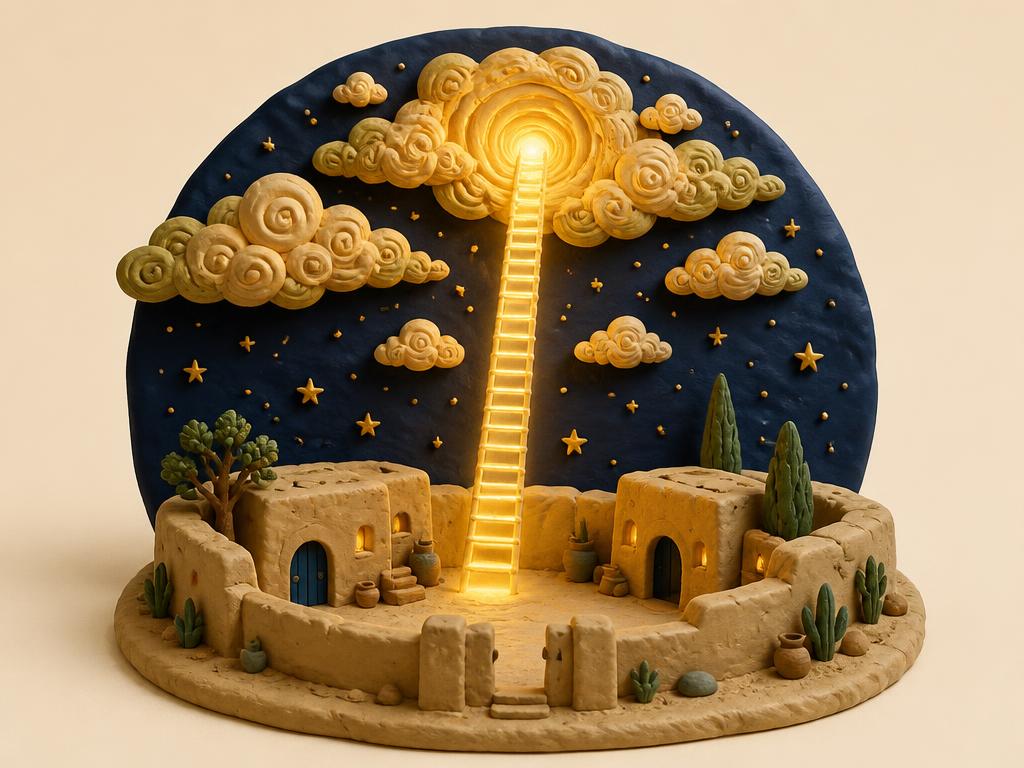
In one night Allah took His Prophet ﷺ from the Sacred Mosque in Makkah to Masjid al-Aqsa in Jerusalem, and then up through the heavens. He came back with the gift of the five daily prayers.
1Al-Isra
The night journey from Masjid al-Haram in Makkah to Masjid al-Aqsa in Jerusalem.
2Leading the prophets
At Al-Aqsa he led the earlier prophets in prayer.
3Al-Mi'raj
He was then raised through the heavens — a journey no other human has made.
4The gift
The five daily prayers were given on this journey. That is how precious salah is.
5Believing it
One of his closest companions believed it straight away, without a moment's doubt.
“Exalted is He who took His Servant by night from al-Masjid al-Haram to al-Masjid al-Aqsa, whose surroundings We have blessed, to show him of Our signs. Indeed, He is the Hearing, the Seeing.”
Do this before next time
Count how many of the five prayers you prayed today. Salah came from the sky — treat it that way.
Lesson 6 · 622 CE / 1 AH · ages 8-11
The Hijrah to Madinah
When Makkah became too dangerous, Allah told the Muslims to move away. The Prophet ﷺ travelled with Abu Bakr, hiding in a cave on the way. The Islamic calendar starts from this journey.
1A dream of the destination
The Prophet ﷺ told the Muslims he had been shown in a dream the place they would migrate to — a land of date palms between two mountains — and the migration began.
2The cave on the mountain of Thaur
The Prophet ﷺ and Abu Bakr hid in a cave on the mountain of Thaur while searchers passed right by.
3'Do not grieve'
In the cave he told Abu Bakr: do not be sad — Allah is with us.
4A new city
The city the Prophet ﷺ settled in became known as Al-Madinah, the city of the Prophet ﷺ.
5Year one
The Hijri calendar counts its years from this migration.
Illaa tansuroohu faqad nasarahul laahu iz akhrajahul lazeena kafaroo saaniyasnaini iz humaa filghaari iz yaqoolu lisaahibihee la tahzan innnal laaha ma'anaa fa anzalallaahu sakeenatahoo 'alaihi wa aiyadahoo bijunoodil lam tarawhaa wa ja'ala kalimatal lazeena kafarus suflaa; wa Kalimatul laahi hiyal 'ulyaa; wallaahu 'Azeezun Hakeem;
“If you do not aid the Prophet - Allah has already aided him when those who disbelieved had driven him out [of Makkah] as one of two, when they were in the cave and he said to his companion, "Do not grieve; indeed Allah is with us." And Allah sent down his tranquillity upon him and supported him with angels you did not see and made the word of those who disbelieved the lowest, while the word of Allah - that is the highest. And Allah is Exalted in Might and Wise.”
“Narrated Aisha: ... At that time the Prophet (ﷺ) was in Mecca, and he said to the Muslims, 'In a dream I have been shown your migration place, a land of date palm trees, between two mountains, the two stony tracts.' So, some people migrated to Medina ... Then Allah's Messenger (ﷺ) and Abu Bakr reached a cave on the mountain of Thaur and stayed there for three nights.”
Sahih al-Bukhari 3905
Do this before next time
Find out what Hijri year it is right now, and what month.
Lesson 7 · Madinah years · ages 12-15
Building a city
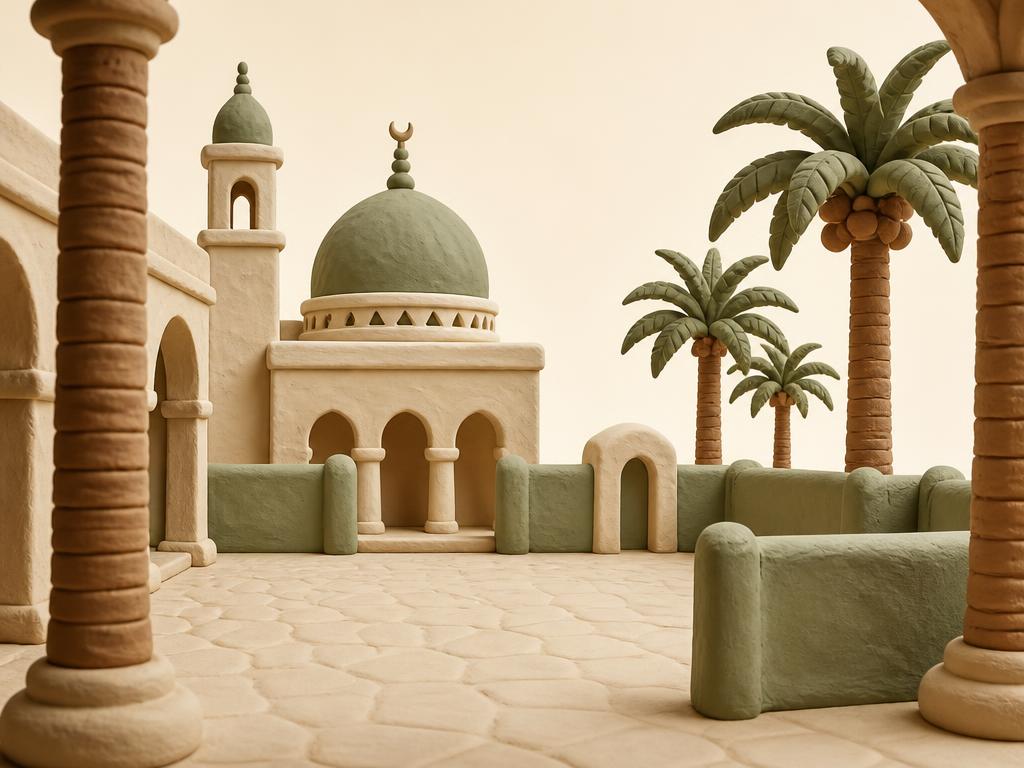
In Madinah the Prophet ﷺ built a mosque, paired every newcomer with a local family, wrote an agreement between the city's communities, and taught by living among people.
1The mosque first
Masjid an-Nabawi was built out of mud brick and palm trunks — the heart of the city.
2Muhajirun & Ansar
Those who migrated with him were paired with the helpers of Madinah, who shared their homes and food.
3One agreement
A written pact set out rights and duties between the Muslims and the other tribes of Madinah.
4Tested in battle
Several battles were fought in defence of the young community, with strict rules against harming non-fighters.
5Makkah opened
Later, Makkah was entered almost without fighting, and the Prophet ﷺ forgave the people who had driven him out.
Wallazeena tabawwa'ud daara wal eemaana min qablihim yuhibboona man haajara ilaihim wa laa yajidoona fee sudoorihim haajatam mimmaa ootoo wa yu'siroona 'alaa anfusihim wa law kaana bihim khasaasah; wa many yooqa shuhha nafsihee fa ulaaa'ika humul muflihoon
“And [also for] those who were settled in al-Madinah and [adopted] the faith before them. They love those who emigrated to them and find not any want in their breasts of what the emigrants were given but give [them] preference over themselves, even though they are in privation. And whoever is protected from the stinginess of his soul - it is those who will be the successful.”
Do this before next time
Do one thing an Ansari would do: share something of yours with someone new at school or the masjid.
Lesson 8 · 2 AH · ages 12-15
The day of Badr
A small group of Muslims met a much larger opposing army at the wells of Badr. They were outnumbered, they made dua, and Allah helped them.
1Badr is a place
It is a valley with wells on the trade road between Makkah and Madinah.
2Outnumbered
The Muslims were a small group, heavily outnumbered by the opposing army.
3Dua before strength
The Prophet ﷺ spent the night before in prayer, asking Allah for help.
4Allah's help came
The Qur'an says Allah helped them at Badr while they were weak — so they should be grateful and conscious of Him.
5The lesson for us
Numbers are not what decide things. Preparation, sincerity and dua are.
Wa laqad nasarakumul laahu bi-Badrinw wa antum azillatun fattaqul laaha la'allakum tashkuroon
“And already had Allah given you victory at [the battle of] Badr while you were few in number. Then fear Allah; perhaps you will be grateful.”
Do this before next time
Think of something that feels too big for you, and make a specific dua about it tonight.
Lesson 9 · 8 AH · ages 12-15
Returning to Makkah
Years after being driven out, the Prophet ﷺ walked back into Makkah with many Muslims — and forgave the people who had hurt him. The idols around the Kabah were removed.
1He came back peacefully
Makkah was entered without a battle; the Prophet ﷺ told his companions not to harm those who stayed in their homes.
2Forgiveness, not revenge
The people who had tortured and mocked the Muslims were pardoned.
3The Kabah cleared
The Prophet ﷺ entered Makkah and struck the idols around the Kabah with a stick, saying: truth has come and falsehood has vanished.
4Worship restored
The Kabah returned to the worship of Allah alone.
5Surah An-Nasr
The Qur'an describes the help of Allah and the victory, and tells the Prophet ﷺ to praise and seek forgiveness.
Fa sab bih bihamdi rabbika was taghfir, innahu kaana tawwaaba
“Then exalt [Him] with praise of your Lord and ask forgiveness of Him. Indeed, He is ever Accepting of repentance.”
“Narrated Abdullah bin Masud: Allah's Messenger (ﷺ) entered Mecca (in the year of the Conquest) and there were three-hundred and sixty idols around the Kaaba. He then started hitting them with a stick in his hand and say: 'Truth (i.e. Islam) has come and falsehood (disbelief) vanished. Truly falsehood (disbelief) is ever bound to vanish.'”
Sahih al-Bukhari 4720
Do this before next time
Forgive one person this week who has not said sorry to you, and do not bring it up again.
Lesson 10 · 10–11 AH · ages 12-15
The farewell sermon
On his final pilgrimage the Prophet ﷺ stood at Arafah and left the ummah with a summary of everything: no racism, no cheating, care for women, and hold on to the Qur'an. He passed away in Madinah not long after.
1All people are equal
No Arab is better than a non-Arab, and no white person better than a black person — only taqwa counts.
2Rights are sacred
Life, property and trust must be protected; debts and interest were addressed directly.
3Treat women well
He reminded the men of their duties to their wives and families before Allah.
4Hold to the guidance
He left the Qur'an and his sunnah as what the ummah must hold on to.
Yaaa ayyuhan naasu innaa khalaqnaakum min zakarinw wa unsaa wa ja'alnaakum shu'oobanw wa qabaaa'ila lita'aarafoo inna akramakum 'indal laahi atqaakum innal laaha 'Aleemun khabeer
“O mankind, indeed We have created you from male and female and made you peoples and tribes that you may know one another. Indeed, the most noble of you in the sight of Allah is the most righteous of you. Indeed, Allah is Knowing and Acquainted.”
Hurrimat 'alaikumul maitatu waddamu wa lahmul khinzeeri wa maaa uhilla lighiril laahi bihee walmun khani qatu wal mawqoozatu wal mutarad diyatu wanna teehatu wa maaa akalas sabu'u illaa maa zakkaitum wa maa zubiha 'alan nusubi wa an tastaqsimoo bil azlaam; zaalikum fisq; alyawma ya'isal lazeena kafaroo min deenikum falaa takhshawhum wakh shawn; alyawma akmaltu lakum deenakum wa atmamtu 'alaikum ni'matee wa radeetu lakumul Islaama deenaa; famanidturra fee makhmasatin ghaira mutajaanifil li ismin fa innallaaha Ghafoorur Raheem
“Prohibited to you are dead animals, blood, the flesh of swine, and that which has been dedicated to other than Allah, and [those animals] killed by strangling or by a violent blow or by a head-long fall or by the goring of horns, and those from which a wild animal has eaten, except what you [are able to] slaughter [before its death], and those which are sacrificed on stone altars, and [prohibited is] that you seek decision through divining arrows. That is grave disobedience. This day those who disbelieve have despaired of [defeating] your religion; so fear them not, but fear Me. This day I have perfected for you your religion and completed My favor upon you and have approved for you Islam as religion. But whoever is forced by severe hunger with no inclination to sin - then indeed, Allah is Forgiving and Merciful.”
Do this before next time
Pick one line of the farewell sermon and write how it changes something you do.
Every ayah on this page comes from the Tanzil Uthmani text of the Qur'an with the Sahih International translation, and every hadith carries its collection and number so you can check it yourself. Back to the learning path